
Key Takeaways
- Eco-friendly land clearing methods protect biodiversity and maintain healthy soil.
- Sustainable solutions, such as forestry mulching, selective clearing, and livestock grazing, minimize environmental harm.
- Incorporating these methods can increase both land value and ecological resilience.
Understanding Eco-Friendly Land Clearing
Property development, agriculture, and habitat restoration all frequently require responsible land management. Traditional methods, such as burning or large-scale excavation, can lead to soil degradation, waterway pollution, and a significant loss of plant and animal habitats. Today, sustainable land clearing practices provide property owners with the opportunity to meet their development needs while preserving the integrity of the environment. These methods focus on maintaining soil structure, reducing waste, and protecting native species while allowing land modifications. Unlike traditional clearing, eco-friendly approaches prioritize long-term ecological health, help retain organic matter, lower runoff, and preserve wildlife corridors. Balancing land use with conservation fosters healthy ecosystems and sustainable projects. Additionally, sustainable clearing enhances property value by preventing erosion and easing landscaping, supporting future uses and regulatory compliance, especially in protected areas. For specific vegetation removal, such as tree removal for safety or space, professional services ensure efficient, minimal-impact removal, promoting sustainability.
Forestry Mulching: A Sustainable Approach
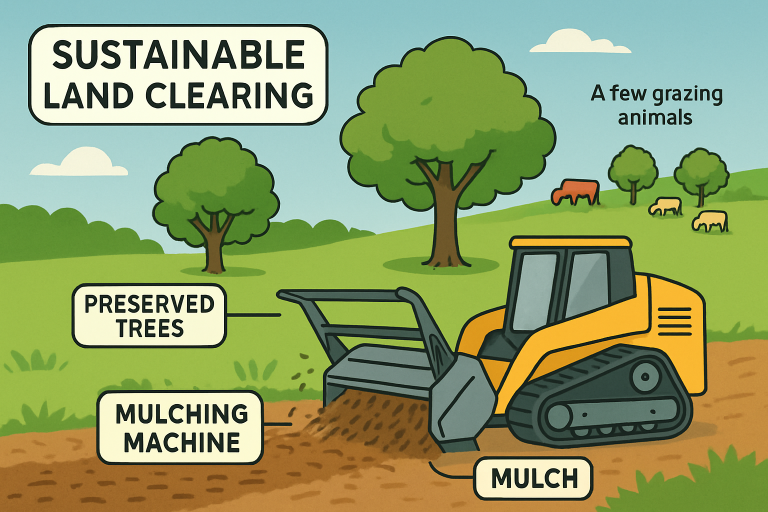
Forestry mulching stands out as a leading eco-friendly method for land clearing. Using specialized machinery, trees, brush, and undergrowth are ground into mulch and spread evenly over the soil’s surface. This method offers a protective barrier that guards against erosion, retains soil moisture, and naturally returns nutrients as the mulch breaks down. Mulched debris also suppresses the growth of invasive species, allowing desirable native plants to regenerate unimpeded.
An additional benefit of forestry mulching is that it eliminates the need for burning or transporting large volumes of debris. As a result, carbon emissions are minimized, and sensitive habitats remain largely undisturbed. According to the Natural Resources Defense Council, reducing the frequency of land burning and cutting excess emissions from hauling are critical to fighting climate change. Forestry mulching is, therefore, one of the most sustainable options for areas with dense or difficult-to-access vegetation.
Selective Clearing: Preserving Native Flora
Unlike clear-cutting, selective clearing prioritizes the preservation of healthy trees and native plants, targeting only unwanted or invasive species for removal. This method involves careful tree removal, ensuring minimal impact on the overall landscape. It helps maintain natural diversity, supports wildlife habitats, and safeguards threatened species that might be present on the land. Selective clearing typically starts with a careful assessment of the landscape to identify which vegetation should remain and what must be cleared to achieve the landowner’s specific aims.
This prioritization of native species and strategic removal of invasive growth contributes to long-term ecological health. For areas where conservation is a priority, selective clearing is essential, supporting both property enhancement and environmental stewardship. The U.S. Forest Service emphasizes the importance of managing invasive species and nurturing native flora in rebuilding resilient landscapes and restoring biodiversity.
Utilizing Grazing Animals for Natural Clearing
Harnessing the natural grazing instincts of animals like goats or sheep can provide a chemical-free and energy-efficient solution for land clearing. These animals consume unwanted brush, weeds, and invasive plants, transforming even rocky or uneven terrain that machinery cannot easily access. Beyond clearing, their waste fertilizes the soil, improving its structure and fertility over time.
Grazing also encourages new growth by trimming back overgrowth and allowing sunlight to reach the forest floor, which can aid in the regeneration of native grasses and seedlings. Land managers seeking a natural, low-impact method to control brush and overgrowth are increasingly adopting managed grazing practices, as reported by National Geographic. This environmentally friendly approach reduces the need for herbicides and heavy equipment, limiting both greenhouse gas emissions and soil disruption.
Implementing Erosion Control Measures
After land has been cleared, the threat of soil erosion becomes more pronounced. Preventing erosion is critical to sustaining both the productivity and ecological health of the cleared area. Techniques such as planting fast-growing cover crops, applying forestry mulch, or installing silt fences and barrier systems are all vital in protecting topsoil from being washed away by wind or rain.
Proper erosion control not only helps keep precious soil nutrients in place but also protects local waterways from excessive sedimentation, a major environmental concern. A proactive erosion management plan paired with eco-friendly land clearing nurtures a self-sustaining, healthy landscape capable of supporting a variety of uses into the future.
Incorporating Mycoremediation Techniques
Mycoremediation, the use of fungi to decompose organic debris and restore contaminated soils, represents an exciting frontier in sustainable land management. Certain mushroom species are known for their remarkable ability to break down toxins, remediate pollutants, and convert woody debris into rich, living soil. Introducing appropriate fungal inoculants to recently cleared land accelerates decomposition, closing the nutrient loop and safeguarding the site’s long-term fertility.
By leveraging mycoremediation, property owners can turn problematic debris or disturbed soils into resources that benefit future crops, landscaping, or restoration projects. These techniques can play a transformative role in both rural and urban projects that seek to meet environmental regulations or enhance the sustainability profile of property development.
Conclusion
Sustainable, eco-friendly land clearing is both a responsible stewardship strategy and a practical investment for property owners. By adopting practices such as forestry mulching, selective clearing, and natural grazing, landowners can maximize the value and usability of their land while ensuring its ecological health for generations to come. Emphasizing soil protection, biodiversity, and innovative techniques such as mycoremediation reinforces a commitment to sustainability—and enables property development that truly benefits both people and the planet.