Trolling for trout in reservoirs can be challenging, especially when fish are scattered across vast expanses of water. However, one technique stands out for its effectiveness: the S-curve trolling pattern. This method has helped countless anglers locate and catch more trout by covering water efficiently while presenting lures at varying speeds. Whether you’re a seasoned angler or just getting started, understanding S-curve patterns will transform your reservoir fishing experience. For quality equipment and expert advice, Fishing Gear Shops offers everything you need to get on the water with confidence.
Understanding the S-curve Trolling Method
The S-curve trolling pattern involves steering your boat in smooth, sweeping turns that create an S-shape across the water. Unlike straight-line trolling, this approach causes your lures to speed up and slow down naturally as they swing through the curves. Additionally, the lures on the outside of each turn travel faster and cover more water, while inside lures slow down and dive deeper. This variation in speed and depth triggers strikes from trout that might ignore a lure moving at constant speed.
Many anglers wonder how to fish for trout in a lake effectively, and S-curve trolling provides an excellent solution. The technique works because it mimics the erratic movement of injured baitfish, which trout instinctively target. Moreover, the changing presentation keeps your lures in the strike zone longer than straight trolling would allow.
Why S-curves Outperform Straight-line Trolling
Straight-line trolling maintains constant speed and depth, which can become predictable to educated reservoir trout. In contrast, S-curve patterns create dynamic presentations that appeal to a trout’s predatory instincts. The outside lures rise in the water column during turns, flashing and darting like fleeing prey. Meanwhile, inside lures slow down and wobble enticingly.
Research from the North American Journal of Fisheries Management shows that varying retrieval speeds increases strike rates for many predatory fish species. Therefore, incorporating curves into your trolling runs naturally produces the speed changes that trigger more bites. Furthermore, this method allows you to cover different depth zones simultaneously, helping you locate fish faster.
Essential Gear for S-curve Trolling
Selecting the right equipment makes S-curve trolling more productive and enjoyable. Start with medium-action rods between seven and nine feet long. These provide enough backbone to handle reservoir trout while offering the flexibility needed to absorb sudden strikes during turns.
Line choice matters significantly for this technique. Monofilament line in the 8 to 12-pound test range works well for most situations. It offers good stretch to cushion hooksets and visibility to monitor your spread. However, some anglers prefer fluorocarbon for its low visibility and faster sink rate in clear water.
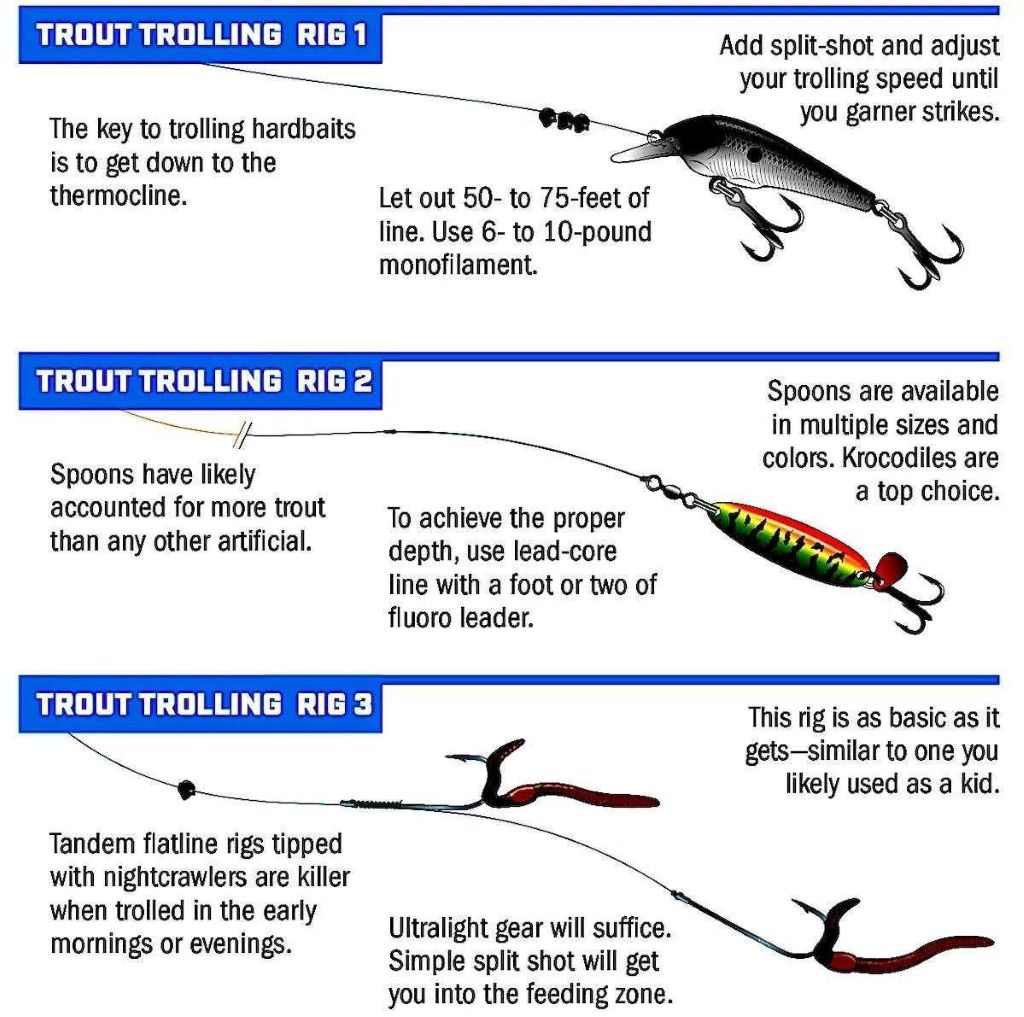
For lures, focus on spoons, small crankbaits, and spinners in the 2 to 4-inch range. Chrome, gold, and chartreuse patterns consistently produce results across different reservoirs. Additionally, carry various diving depths so you can adjust your presentation based on where trout are holding.
Downriggers or planer boards help you cover multiple depth zones simultaneously. These tools let you present lures at precise depths while maintaining proper spacing between lines. Consequently, you can experiment with different patterns until you find what trout want on any given day.
Executing the Perfect S-curve Pattern
Begin by identifying productive water based on structure, temperature, and baitfish location. Start your trolling run at a comfortable speed, typically between 1.5 and 2.5 miles per hour for trout. Once your lures reach the desired depth, initiate your first turn by steering smoothly in one direction.
The key is making gradual turns rather than sharp corners. Aim for curves that take 30 to 45 seconds to complete. This timing allows outside lures to accelerate properly while inside lures maintain an attractive swimming action. After completing one curve, straighten your path briefly before turning in the opposite direction.
Monitor your rods carefully during turns. Outside rods will load up as lures pull harder, while inside rods may go slack momentarily. This is normal and creates the speed variation that triggers strikes. However, if rods stay slack too long, you’re turning too sharply.
Adjust your pattern based on results. If fish hit consistently on outside rods, make wider turns to keep lures in that faster zone longer. Conversely, if inside rods produce better, tighten your curves to emphasize the slower, deeper presentation. Additionally, vary your trolling speed slightly between passes to find the optimal pace for current conditions.
Reading Water and Locating Trout
According to the U.S. Geological Survey, reservoir trout often suspend in the thermocline during warmer months, typically between 15 and 35 feet deep depending on the waterbody. Use electronics to identify this critical zone where temperature and oxygen levels are ideal.
Focus your S-curve patterns along points, submerged humps, and creek channel edges. These structures concentrate baitfish and create ambush points for trout. Furthermore, areas where wind blows into shorelines often hold more active fish due to increased oxygen and food availability.
Early morning and evening periods generally produce the best action, though overcast days can extend productive fishing throughout the day. During these prime times, trout move shallower to feed, so adjust your depths accordingly.
Seasonal Adjustments for S-curve Success
Spring fishing requires slower speeds and shallower presentations as trout recover from spawning and feed aggressively in warming water. Target depths between 10 and 20 feet near creek inlets and shallow flats. Use brighter colored lures to match active baitfish.
Summer pushes trout deeper as surface temperatures rise. Focus your efforts early and late in the day, running S-curves along the thermocline. Downriggers become essential for reaching the 25 to 40-foot depths where trout often suspend. Moreover, consider using larger spoons that create more flash and vibration in deeper water.
Fall brings trout back to shallower water as temperatures cool. This season offers some of the year’s best trolling action. Run wider S-curves in the 15 to 25-foot range and increase your trolling speed slightly to match the metabolism of actively feeding fish.
Winter requires patience and precision. Trout move slowly in cold water, so reduce your trolling speed to 1 to 1.5 miles per hour. Keep patterns tight and focus on deeper structure where fish hold in the most stable temperatures.
Common Mistakes to Avoid
Many anglers turn too sharply, causing inside lines to tangle or lose their action entirely. Remember that gradual, sweeping turns produce better results and fewer tangles. Additionally, running lines too close together increases the risk of crossing and reduces your coverage area.
Ignoring your electronics is another frequent error. Modern fishfinders provide invaluable information about depth, structure, and fish location. Use this data to adjust your pattern in real-time rather than blindly covering water.
Some fishermen stick with one pattern regardless of results. Successful trollers constantly experiment with speed, depth, and lure selection until they find the winning combination. Therefore, don’t be afraid to make changes if you’re not getting strikes.
Advanced Techniques for Consistent Catches
Once you master basic S-curves, try figure-eight patterns that combine multiple curves in succession. This approach keeps lures in productive water longer and presents them from different angles. Furthermore, it helps you thoroughly cover promising areas without retracing the exact same path.
Adding dodgers or flashers ahead of your lures increases their visibility and vibration. These attractors work especially well in stained water or during low-light conditions. However, they require slightly heavier gear to handle the additional drag.
Experiment with stacking multiple lines at different depths on a single downrigger. This technique, called stacking, lets you cover more of the water column efficiently. Just ensure proper spacing between releases to avoid tangles during turns.
Conclusion
S-curve trolling patterns offer reservoir trout anglers a proven method for increasing catches and finding fish faster. By creating natural speed variations and covering multiple depths simultaneously, this technique triggers strikes from trout that might ignore straight-line presentations. Success requires proper gear selection, attention to seasonal patterns, and willingness to adjust based on conditions. Whether you’re fishing spring, summer, fall, or winter, incorporating S-curves into your trolling arsenal will make you a more versatile and successful angler. The combination of proper technique, quality equipment, and persistence on the water consistently produces results across reservoirs nationwide.
Frequently Asked Questions
What is the ideal trolling speed for S-curve patterns?
Most reservoir trout respond best to speeds between 1.5 and 2.5 miles per hour. However, adjust based on water temperature and fish activity. Colder water requires slower speeds, while warmer conditions allow faster trolling. Watch your rods and let the fish tell you what they prefer.
How many rods should I run when S-curve trolling?
Two to four rods provide good coverage without creating excessive tangles. Start with two rods to learn the technique, then add more as you gain experience. Ensure adequate spacing between lines, typically 50 to 100 feet back and 20 feet apart at the boat.
Can I use S-curve patterns in small reservoirs?
Absolutely. S-curves work in reservoirs of any size. In smaller waters, simply make tighter turns to stay within productive areas. The same principles apply regardless of reservoir size, though you may need to adjust your overall pattern scale.
What depth should I target for reservoir trout?
Depth varies by season and reservoir characteristics. Spring and fall often find trout between 10 and 25 feet, while summer pushes them to 25 to 40 feet or deeper. Use electronics to locate the thermocline and concentrate your efforts in that zone during warm months.
Do S-curves work for other fish species?
Yes, S-curve trolling is effective for many species including salmon, walleye, striped bass, and lake trout. The technique’s ability to vary speed and depth appeals to various predatory fish. Simply adjust your lures, depths, and speeds to match your target species’ preferences.
Related Topics: