
Surfboards are a serious investment. Whether you ride a shortboard, longboard, or funshape, protecting it from dings, pressure dents, and UV damage should be a top priority. The market is full of options, and choosing the right bag can feel overwhelming. However, with the right knowledge, you can make a smart decision that keeps your board safe for years to come.
This guide walks you through everything you need to know about selecting the best surfboard bags in 2026.
Why Board Protection Matters More Than Ever
Modern surfboards are lighter and more performance-focused than ever before. That also means they are more fragile. Even a short car ride can result in a pressure ding if your board is not properly protected.
Travel, in particular, puts boards at serious risk. Airlines toss luggage with little care. Boards bang against other bags in cargo holds. Therefore, investing in quality board protection gear is not optional — it is essential.
Beyond travel, everyday use also takes a toll. Sun exposure degrades foam and resin over time. Moisture can seep into dings and cause delamination. A good bag shields your board from all of these threats.
Types of Surfboard Bags
Not all bags are built the same. Knowing the difference helps you choose the right one for your needs.
Day Bags (Stretch Covers)
Day bags are lightweight covers designed for short trips. They protect against light scratches and UV rays. You simply slip the board in and go. They are not ideal for air travel, but they are perfect for daily use.
Most day bags are made from lycra or light neoprene. They pack down small and dry quickly. However, they offer minimal padding, so they should not be used when packing boards with other luggage.
Travel Bags
Travel bags are built for serious protection. They are thicker, heavier, and padded with foam. Most come with reinforced rails, padded nose and tail sections, and heavy-duty zippers.
If you travel by air even once a year, a travel bag is a must. Look for bags with at least 5mm to 10mm of foam padding throughout the body, and extra padding at the nose and tail, which are the most vulnerable spots.
Coffin Bags
Coffin bags hold multiple boards at once. They are popular among surfers who travel with two or three sticks. Additionally, many coffin bags come with wheels, which makes airport navigation much easier.
If you are travelling with a quiver, a coffin bag saves money on checked baggage fees. It also keeps all your boards organised in one place.
Key Features to Look for in 2026
The surfboard bag market has evolved significantly. Here is what to focus on when comparing your options.
Padding Thickness
Padding is the single most important factor for ding protection. Look for a minimum of 5mm of foam for day-to-day use. For air travel, go with 10mm or more. Some premium bags even offer 15mm padding in high-impact zones.
Pay close attention to the nose and tail padding. These areas take the hardest hits during handling. A bag that skimps on padding here will not protect your board properly.
Material Quality
The outer shell of the bag should be durable and water-resistant. High-denier polyester and nylon are common choices. They resist abrasion and hold up well under rough handling.
The inner lining is equally important. Heat-reflective silver lining helps keep your board cool in hot environments. Some bags also feature a waterproof inner coating, which is useful if you are sliding a wet board inside.
Zipper and Closure System
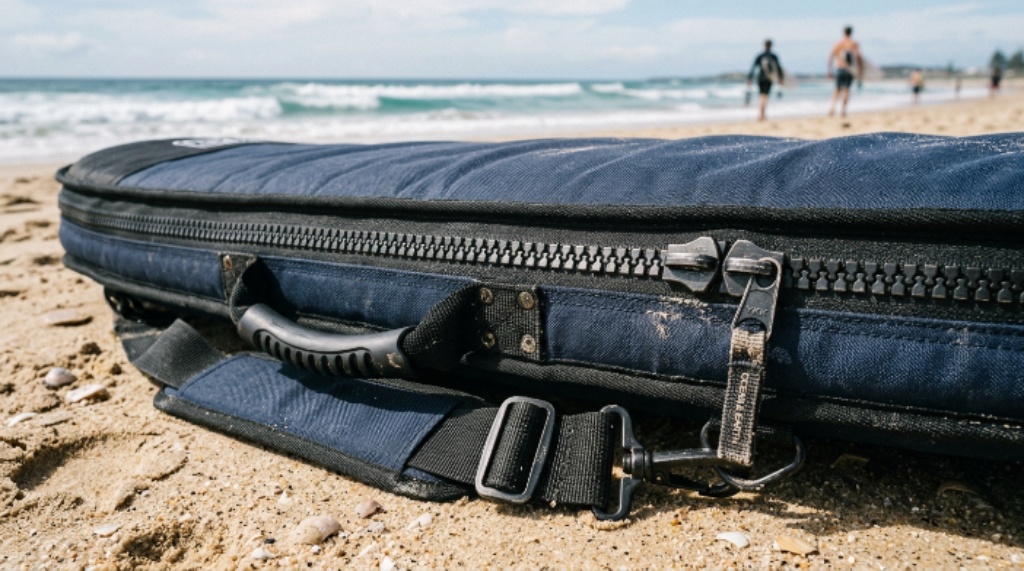
Zippers take a beating. Look for large, heavy-duty zippers from trusted brands. A zipper failure mid-trip can leave your board exposed. Additionally, check for a zipper garage — a small flap that protects the zipper from sand and salt.
Double zippers make it easier to open and close the bag with one hand. Some bags also use hook-and-loop closures at the tail for added security.
Carry Straps and Handles
You will be carrying your bag a lot. Therefore, comfortable straps matter. Padded shoulder straps distribute weight evenly and reduce fatigue. Look for straps that are adjustable and reinforced at the attachment points.
Side handles are also useful when loading your board into a car or overhead compartment. Multiple carry points give you more flexibility.
Wheel Systems
For travel bags and coffin bags, wheels are a game-changer. Airport floors are long and hard. A smooth-rolling wheel system reduces strain and speeds up transit.
Look for large, durable wheels with sealed bearings. Cheap plastic wheels break easily under the weight of a heavy coffin bag. Additionally, check that the wheel housing is reinforced to prevent it from tearing away from the bag.
Sizing Your Bag Correctly
A bag that is too short leaves your nose exposed. One that is too long slides around and offers poor protection. Getting the right size is critical.
Measure your board from nose to tail. Add two to four inches to that measurement. This gives you enough room to fit your board without forcing it in, while still keeping it snug enough to stay protected.
Many brands offer bags in standard lengths from five feet to ten feet or more. Some also offer custom sizing, which is worth considering if your board has unusual dimensions.
For travel bags, check the internal width as well. Thicker boards like longboards and eggs need wider bags. Always check the manufacturer’s sizing guide before purchasing.
Sustainable Options Worth Considering
Sustainability is a growing concern in the surf industry. In 2026, several brands now offer bags made from recycled materials. Recycled polyester, ocean plastic, and bio-based foams are all becoming more common.
Choosing a sustainable bag does not mean sacrificing performance. Many eco-friendly options match or exceed the protection levels of traditional bags. Additionally, supporting brands with sustainable practices helps reduce the environmental impact of your surfing lifestyle.
Tips for Getting the Most Out of Your Bag
Even the best surfboard bags need proper care. Following these simple steps will extend the life of your bag and keep your board better protected.
- Rinse your bag with fresh water after beach use to remove salt and sand.
- Allow your bag to dry completely before storing it. Moisture leads to mildew and odour.
- Avoid leaving your bag in direct sunlight for extended periods when not in use.
- Check your zippers regularly. Apply zipper lubricant to keep them running smoothly.
- Inspect the padding periodically. Compressed foam loses its protective ability over time.
Conclusion
Choosing the right bag comes down to how and where you use your board. For daily beach runs, a quality day bag with UV protection will do the job. For air travel, invest in a thick, padded travel bag with reinforced zones. If you travel with multiple boards, a wheeled coffin bag is your best bet.
Focus on padding thickness, material quality, zipper durability, and sizing. These four factors have the biggest impact on how well your board is protected. Additionally, consider sustainable options if reducing your environmental footprint matters to you.
The best surfboard bags in 2026 are smarter, stronger, and more thoughtfully designed than ever before. Take your time, compare your options, and choose a bag that matches your surf lifestyle. Your board will thank you.
Frequently Asked Questions
What is the best padding thickness for air travel?
For air travel, look for bags with at least 10mm of foam padding throughout. High-impact zones like the nose and tail should have extra padding, ideally 15mm or more.
Can I use a day bag for international travel?
No. Day bags are designed for light, short-distance use. They do not offer enough protection for the rough handling that occurs during airline baggage processing.
How do I know what size bag to buy?
Measure your board from nose to tail, then add two to four inches. This gives you the right fit — snug enough for protection but roomy enough for easy loading.
Are wheeled coffin bags worth the extra cost?
Yes, especially if you travel frequently or carry multiple boards. Wheels reduce physical strain and make navigating airports much easier.
How do I clean and maintain my surfboard bag?
Rinse it with fresh water after each use, let it dry fully before storing, and apply zipper lubricant regularly. Periodically check the padding for compression, as worn foam loses its protective ability.
Related Topics: