
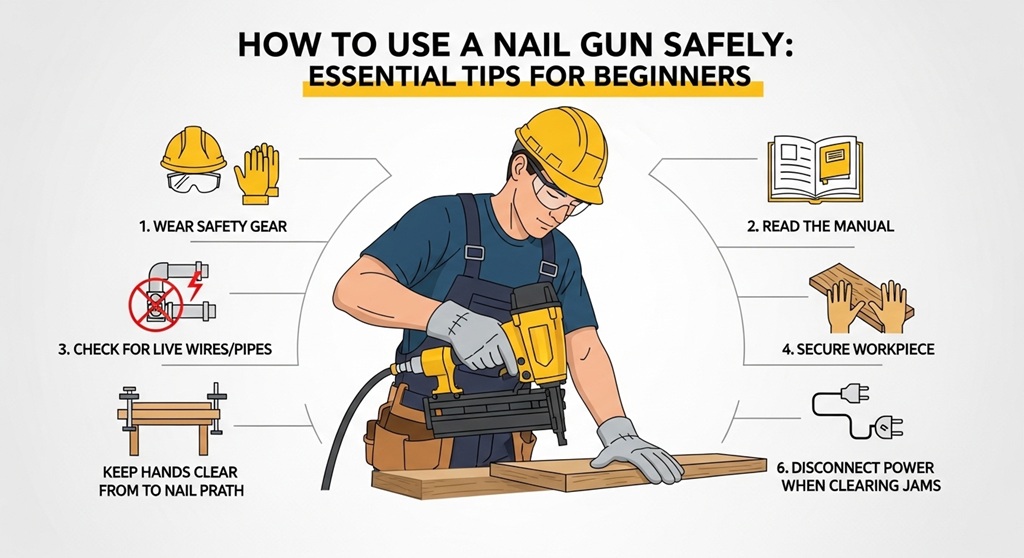
Nail gun safety refers to a set of rules and practices designed to prevent injuries while using pneumatic, electric, or battery-powered nail guns. These tools are widely used in construction, woodworking, framing, and DIY projects because they drive nails quickly and efficiently. However, improper use can cause serious injuries.
According to the U.S. Centers for Disease Control and Prevention (CDC), nail guns send over 37,000 people to emergency rooms each year in the United States alone. Around 40% of those injuries involve workers in construction, while the rest involve homeowners and DIY users. Most incidents occur due to accidental discharge, improper trigger use, or lack of safety training.
For beginners, understanding nail gun safety rules is critical before starting any project. A nail gun can drive a nail at speeds exceeding 100 feet per second. That means a small mistake can cause serious harm.
This guide explains how to use a nail gun safely, what safety equipment you need, and how beginners can avoid common mistakes. If you follow these construction tool safety practices, you can work faster while reducing risk.
What Are the Most Important Nail Gun Safety Rules Beginners Should Know?
Short Answer: The most important nail gun safety rules include using the correct trigger system, wearing protective gear, keeping hands away from the firing path, and disconnecting the tool when not in use.
Beginners often assume a nail gun works like a simple power drill. In reality, it is a high-force construction tool that requires strict safety discipline.
Key Nail Gun Safety Rules
- Always wear eye protection and hearing protection.
- Use a nail gun with a sequential trigger instead of a contact trigger.
- Never place your hand behind the material you are nailing.
- Disconnect the air supply or battery when clearing jams.
- Keep the nail gun pointed away from your body.
- Do not bypass safety mechanisms.
- Store the tool safely when not in use.
Construction safety experts recommend beginners start with sequential trigger nail guns. These require the safety tip to touch the surface before the trigger can fire, reducing accidental discharge.
Following these construction tool safety guidelines significantly lowers injury risk.
What Types of Nail Guns Exist and Which One Is Safest for Beginners?
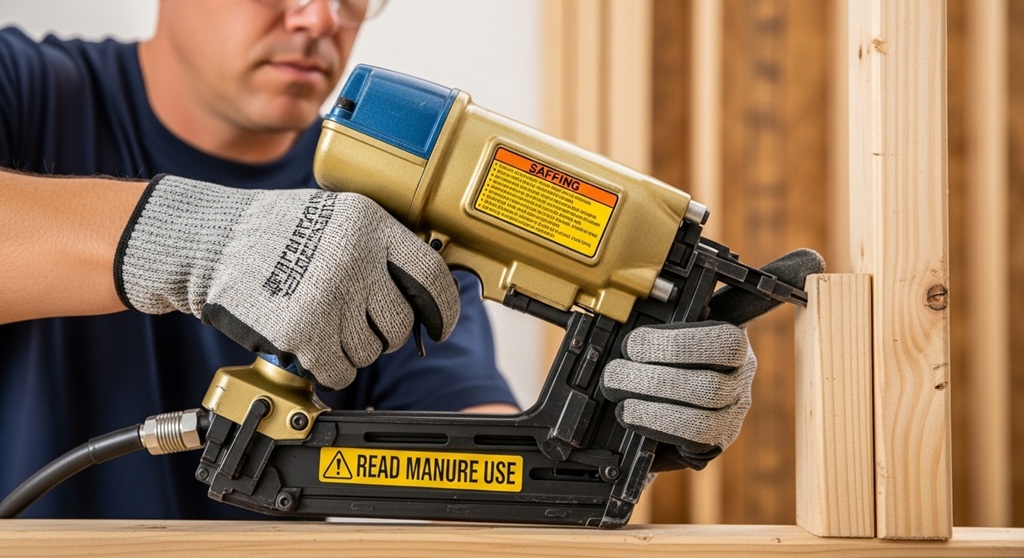
Short Answer: The safest nail guns for beginners are sequential-trigger models, typically available in pneumatic, cordless battery-powered, and electric versions.
Understanding the types of nail guns helps beginners choose the safest option.
| Type of Nail Gun | Power Source | Common Uses | Safety Level for Beginners |
|---|---|---|---|
| Pneumatic Nail Gun | Air compressor | Framing, roofing, construction | Moderate |
| Cordless Battery Nail Gun | Lithium-ion battery | DIY, woodworking | High |
| Electric Nail Gun | Direct power | Light carpentry | High |
| Gas-powered Nail Gun | Fuel cell + battery | Professional construction | Moderate |
For beginners working on DIY projects, a cordless battery nail gun with a sequential trigger is usually the safest choice.
Professional framing nailers are powerful and can drive large nails quickly. Beginners should practice with lighter tools first.
What Safety Gear Should You Wear When Using a Nail Gun?
Short Answer: Essential nail gun safety equipment includes safety glasses, hearing protection, gloves, steel-toe boots, and sometimes a hard hat.
Construction tool safety guidelines emphasize personal protective equipment (PPE) as the first line of defense.
Recommended PPE for Nail Gun Use
- Safety glasses – protects eyes from flying nails or debris
- Hearing protection – reduces exposure to loud noise
- Work gloves – improves grip and protects hands
- Steel-toe boots – protects feet from dropped tools
- Hard hat – important on construction sites
Nail guns can sometimes cause nails to deflect off knots or metal surfaces. This can send the nail sideways or backward. Eye protection prevents severe injuries in such cases.
Many workplace safety regulations require PPE whenever power tools are used.
How Do You Use a Nail Gun Safely Step by Step?
Short Answer: Safe nail gun operation involves inspection, proper positioning, controlled firing, and safe storage after use.
Follow this step-by-step process to minimize risk.
Step 1: Inspect the Tool
Before using the nail gun:
- Check for loose parts
- Ensure the safety tip works correctly
- Confirm the correct nails are loaded
- Inspect hoses or batteries
Never operate a damaged tool.
Step 2: Prepare the Work Area
Keep your workspace organized.
- Remove clutter
- Ensure stable footing
- Keep other people away from the firing zone
Most nail gun injuries occur when workers are distracted or rushed.
Step 3: Position the Nail Gun Correctly
Hold the nail gun perpendicular to the work surface.
This prevents nails from bending or ricocheting.
Never hold materials with your hand directly behind the firing point.
Step 4: Fire One Nail at a Time
Beginners should avoid rapid firing.
Press the safety tip firmly against the surface. Then pull the trigger once.
This technique reduces accidental double shots.
Step 5: Disconnect After Use
When finished:
- Disconnect air or battery
- Unload nails
- Store the tool in a safe location
This prevents accidental firing.
What Are the Most Common Nail Gun Injuries and How Can You Prevent Them?
Short Answer: The most common injuries include puncture wounds to the hands and fingers, caused by accidental discharge or nail ricochet.
A study from the National Institute for Occupational Safety and Health (NIOSH) found that hand injuries account for nearly 60% of nail gun accidents.
Common Causes of Nail Gun Injuries
- Contact trigger misuse
- Nail ricochet
- Double firing
- Improper hand placement
- Clearing jams without disconnecting power
Prevention Tips
- Use sequential trigger systems
- Maintain proper hand positioning
- Disconnect power before maintenance
- Practice on scrap materials first
Training significantly reduces injuries among new users.
What Mistakes Do Beginners Make When Using a Nail Gun?
Short Answer: Beginners often rush, ignore safety features, or hold materials incorrectly.
Here are common mistakes new users make.
Beginner Nail Gun Errors
- Using contact triggers without training
- Holding boards with hands behind the nail path
- Not wearing protective equipment
- Using the wrong nail size
- Ignoring tool maintenance
A real-world construction case study published by OSHA showed that switching from contact triggers to sequential triggers reduced nail gun injuries by up to 65% in some job sites.
This demonstrates how safety-focused tools can dramatically reduce risk.
How Should You Maintain a Nail Gun for Safe Operation?
Short Answer: Regular maintenance includes cleaning, lubrication, checking fasteners, and inspecting safety mechanisms.
Proper maintenance improves both safety and tool lifespan.
Nail Gun Maintenance Checklist
- Clean dust and debris after use
- Lubricate pneumatic tools daily
- Inspect O-rings and seals
- Check nail magazine alignment
- Test safety trigger function
A poorly maintained nail gun can misfire or jam. Both scenarios increase accident risk.
Routine inspection ensures the tool operates correctly.
When Should You Avoid Using a Nail Gun?
Short Answer: Avoid using a nail gun in unstable environments, on fragile materials, or when visibility is poor.
Certain situations increase the chance of accidents.
Situations to Avoid
- Working on unstable ladders
- Using the tool near electrical wiring
- Operating when tired or distracted
- Using damaged materials
If conditions are unsafe, switch to manual tools or postpone the task.
Construction tool safety prioritizes judgment over speed.
Conclusion: How Can Beginners Stay Safe While Using a Nail Gun?
Nail guns are powerful tools that make construction and woodworking faster and more efficient. But with that speed comes risk. Each year thousands of injuries occur because users ignore basic nail gun safety rules.
For beginners, the safest approach is simple. Start with the right tool, preferably a sequential trigger nail gun. Wear protective equipment every time. Keep your hands clear of the firing path. Inspect your equipment before starting any job.
Most nail gun accidents are preventable. Studies show that training and proper trigger systems dramatically reduce injury rates.
When you treat nail gun safety as part of the job, not an afterthought, you protect yourself and everyone around you.
Call to Action:
If you are starting DIY construction or woodworking projects, bookmark this guide and follow these nail gun safety rules every time you work. Share it with coworkers, builders, or DIY enthusiasts who want to improve their construction tool safety habits.
Frequently Asked Questions About Nail Gun Safety
1. Are nail guns dangerous for beginners?
Nail guns can be dangerous if used incorrectly, but beginners can operate them safely by following proper training and safety rules. Using a sequential trigger nail gun, wearing protective equipment, and practicing on scrap materials significantly reduces injury risk.
2. What is the safest type of nail gun trigger?
The sequential trigger is considered the safest option. It requires the safety tip to touch the surface before the trigger is pulled. This prevents accidental firing and reduces double discharge.
3. Do I need safety glasses when using a nail gun?
Yes. Safety glasses are essential when operating nail guns. Nails can ricochet or fragments of wood may fly during fastening. Eye protection prevents serious injuries.
4. Can nails bounce back from wood?
Yes. Nails can deflect when they hit knots, metal plates, or hard surfaces. This is called nail ricochet. It can send the nail sideways or back toward the operator. Proper positioning and safety gear reduce this risk.
5. Should beginners use pneumatic nail guns?
Pneumatic nail guns are powerful and widely used in construction, but beginners may find cordless battery nailers easier to control. Starting with lighter tools helps build confidence and safety habits.
6. What should you do if a nail gun jams?
Always disconnect the power source first. For pneumatic tools, remove the air hose. For cordless tools, remove the battery. Only then should you clear the jam according to the manufacturer’s instructions.
7. How often should you maintain a nail gun?
Nail guns should be inspected before each use. Pneumatic nail guns should be lubricated daily during heavy use. Regular maintenance prevents misfires and improves safety.
Read More Also: How High-Yield Cold Press Juicers Reduce Fruit Waste
Find out: How to Choose a Durable Outdoor Grill That Lasts for Years
