
Skipping is a phenomenal workout—until your rope starts kinking, fraying, or snapping mid-session. You’re probably here because your favorite jump rope isn’t gliding like it used to, or maybe you just bought a new one and want to keep it in top shape. The frustration of a tangled, sluggish rope can kill your motivation. Proper jump rope maintenance is about more than just making it last longer; it’s about ensuring every workout is smooth, safe, and effective. By understanding the simple care routines detailed below, you can avoid equipment failure, save money on replacements, and maintain a confident, uninterrupted rhythm. Let’s dive into the practical steps that will keep your rope turning perfectly.
What Are the Most Common Causes of Jump Rope Damage?
Jump ropes fail for predictable reasons. The primary culprits are environmental exposure, improper storage, and physical wear from surface contact. Identifying these causes early is the first step in effective jump rope maintenance.
Friction Against Abrasive Surfaces
The rope itself is constantly whipped against the ground. Concrete and asphalt are the most abrasive surfaces, rapidly wearing down PVC, vinyl, and even some cable coatings. Even indoor gym floors with rubber matting create friction that generates heat and micro-tears over time. If you skip exclusively on rough surfaces, your rope’s lifespan can shrink dramatically.
Knots and Kinks from Poor Storage
Stuffing a jump rope into a gym bag without coiling it properly leads to permanent kinks. These bends weaken the inner core and outer jacket of the cable. Once a kink sets in, the rope loses its perfect arc and starts to tangle during spins, creating a frustrating feedback loop of damage.
Exposure to Extreme Temperatures
Leaving a jump rope in a hot car or a freezing garage causes materials to expand and contract unnaturally. PVC becomes brittle in cold weather and can crack. Nylon and polyester cords can lose their flexibility in extreme heat. Consistent temperature shock accelerates material fatigue.
How Often Should You Clean Your Jump Rope?
You should clean your jump rope after every intense session if you are sweating heavily, or at least once a week for general use. Dirt, sweat, and oils from your hands create a grimy layer that increases friction and accelerates wear. A clean rope spins faster and lasts significantly longer.
Daily Wipe-Down for Hygiene
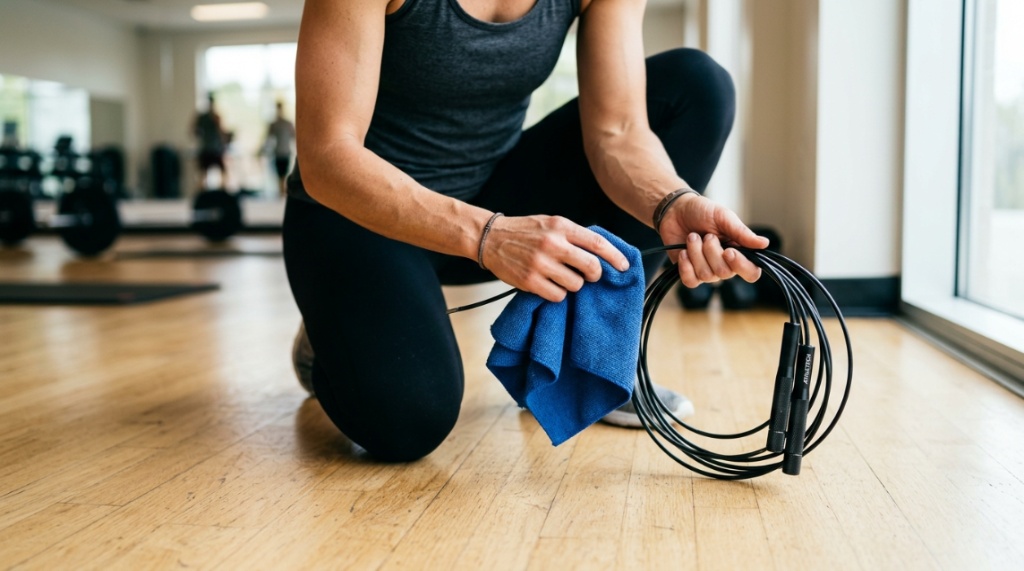
After each workout, take a clean, slightly damp cloth and wipe down the entire length of the rope and the handles. Focus on the area where the rope enters the handle, as this is where grime builds up and causes premature seizing. This quick routine takes 30 seconds and prevents the buildup that corrodes materials.
Deep Cleaning Method for Stubborn Dirt
Every two to four weeks, perform a deep clean. Fill a basin with warm water and a few drops of mild dish soap. Submerge the rope (not the handles if they are leather or have exposed metal bearings) and gently scrub with a soft sponge. Rinse thoroughly and hang the rope to dry completely before using it again. Do not use harsh solvents, as they can strip protective coatings.
Which Lubricant Is Best for Jump Rope Bearings?
For jump ropes with ball bearings or rotating handles, a lightweight, dry lubricant is ideal. Avoid heavy oils or WD-40, which attract dust and create a sticky, sluggish mess. The best choice is a PTFE-based (Teflon) spray or a fine silicone lubricant that penetrates without leaving a wet residue.
Signs Your Bearings Need Lubrication
If you hear a grinding noise, feel resistance in the spin, or notice the rope is twisting at the handle during swings, your bearings are likely dry or dirty. Another clear sign is that the rope does not swing freely when you let it hang and spin it with a flick of the wrist. Ignoring these signs leads to increased friction and handle damage.
Step-by-Step Lubrication Process
- Disassemble: Remove the rope from the handles if possible. This gives you direct access to the bearing.
- Clean first: Use a compressed air duster or a cotton swab dipped in isopropyl alcohol to clear out dust and debris inside the handle.
- Apply lubricant: Spray a short burst of PTFE lubricant directly into the bearing mechanism.
- Rotate: Spin the bearing manually for 10-15 seconds to work the lubricant into all the bearing balls.
- Wipe excess: Remove any excess lubricant that seeps out, as this will attract dirt.
- Reassemble: Reattach the rope and test the spin. It should feel smooth and silent.
How to Fix a Kinked or Twisted Jump Rope?
A kinked jump rope is not necessarily ruined. The fix involves counter-twisting the rope to relieve built-up torque and relaxing the material. This is a common jump rope maintenance trick that can restore an old rope instantly. Do not try to pull the kink straight while it is under tension; this can permanently damage the inner fibers.
Relieving Internal Torque
Hold the rope by the handles and let the cable hang in a U-shape. Bring the handles together and rotate the rope in the air. Watch the cable. If it is twisting, rotate the handles in the opposite direction of the twist for 20-30 seconds. This releases the stored memory in the cable. You should see the kinks begin to flatten out.
Using Warm Water to Relax Material
For stubborn kinks in PVC or vinyl ropes, soak the kinked section in warm (not boiling) water for 5 minutes. Heat temporarily relaxes the polymer structure. After soaking, hang the rope with a small weight (like a dumbbell) attached to the bottom to gently pull the kinks out as it cools and dries. This method works best on ropes that have been kinked from being tightly coiled for long periods.
Can You Replace the Rope Cable Without Changing the Handles?
Yes, most high-quality jump rope handles are designed to be interchangeable. You can absolutely replace the cable while keeping your handles. This is a cost-effective maintenance strategy that allows you to customize the weight and speed of your rope without buying a whole new set.
Identifying the Connection Style
Check how your rope attaches to the handle. The most common systems are:
- Bolt and Hex Key: A screw passes through a hole in the cable. You need a small Allen wrench to loosen and tighten it.
- Pinch Clip: A plastic or metal clip slides over the cable and locks it in place. You pinch the tabs to release.
- Knotted Rope: The cable is tied inside the handle. You will need to untie the knot and retie it with the new cable.
Selecting a Compatible Replacement Cable
When buying a replacement, match the cable diameter to your handle’s entry hole. A 4mm cable is standard for speed ropes. If you are upgrading from a PVC to a steel wire cable, ensure your handles have a durable bearing system that can handle the higher speed and impact. A good resource for selecting the right materials and replacement parts is a dedicated guide on jump rope maintenance and equipment upgrades.
What Is the Proper Way to Store a Jump Rope?
Proper storage is arguably the most important aspect of extending your rope’s life. Always hang it or coil it loosely. Do not fold it over tightly, and never leave it on the floor where it can be stepped on or trapped under equipment.
The Hang Method
Use a carabiner or a simple hook on a wall or gym rack. Attach the rope by the loop on the handles or pinch the handles together and hang the rope by the middle of the cable. This allows the rope to hang straight, preventing kinks. This method also keeps the rope dry and ventilated, which prevents mold and material degradation.
The Ideal Coil Method
If you must store it in a gym bag, coil the rope in a loose, open loop (about 18 inches in diameter). Hold the coil together with a Velcro strap or a loose rubber band. Avoid using tight zip ties. Store the coiled rope in a separate pocket of your bag away from sharp objects like keys or dumbbells, which can nick the cable.
How to Check for Wear and Tear Before Each Workout?
Perform a 30-second visual and tactile inspection before every jump session. This habit prevents mid-workout failures that can cause injury or lost momentum. Focus on three specific areas: the cable, the handles, and the connection point.
Inspecting the Cable
Run the entire length of the rope through your fingers. Feel for flat spots, thin sections, or frayed fibers. Look for discoloration, white stress marks, or small cuts in the coating. Pay special attention to the section of the rope that hits the ground on both sides. This area takes the most impact.
To ensure your equipment lasts through intense routines, proper upkeep is essential—much like understanding the historical evolution covered in The Origins of High Ropes, which highlights how durable materials changed training over time.
Inspecting the Handles and Bearings
Check the handles for cracks, especially around the hole where the rope enters. If you have moving parts or bearings, spin the handle and listen for any grinding or roughness. Ensure the handle’s grip is not peeling or slipping. A loose grip can cause you to lose control of the rope mid-swing.
When Should You Replace Your Jump Rope?
You should replace your jump rope immediately when the cable shows any sign of exposed inner wires, has deep cracks, or when the handles become structurally unstable. Continuing to use a damaged rope is unsafe and compromises your workout quality.
Critical Failure Points
| Component | Condition | Action |
|---|---|---|
| Cable (PVC/Vinyl) | Deep cracks, splits, or holes | Replace immediately |
| Cable (Steel Wire) | Fraying or broken wire strands | Replace immediately |
| Handles | Cracks, chips, or loose screws | Replace handles or rope set |
| Bearings | Rusty, grinding, or seized | Replace if lubrication fails |
| Connection point | Stripped bolt or worn clip | Replace connection part or handles |
Performance-Based Replacement
Even if there are no visible cracks, replace your rope if it has lost its flex and feels stiff and wooden. A rope that no longer forms a clean arc is inefficient. You will find yourself hitting your feet more often. If you skip for fitness several times a week, expect to replace a PVC rope every 2-4 months and a steel cable rope every 6-12 months, depending on surface and frequency of use.
Is Jump Rope Maintenance Different for Speed Ropes vs. Weighted Ropes?
Yes, the maintenance requirements differ slightly based on the rope’s construction and material. Speed ropes are more sensitive to friction and kinks, while weighted ropes require more attention to handle and bearing integrity due to the extra mass.
Caring for a Speed Rope
Speed ropes (thin PVC or steel cable) are highly dependent on low friction. Keep the bearings extremely clean and lightly lubricated. A speed rope hates kinks; a single sharp bend can ruin its aerodynamic efficiency. Always store a speed rope hanging or in a wide loop. Clean the bearings every month if you use them daily. Avoid using them on gritty concrete.
Caring for a Weighted Rope
Weighted ropes put increased stress on the handles. Check the handle threads and screws weekly, as vibrations can loosen them. The heavier cable also puts more wear on the floor contact point. Inspect the cord for flattening where it hits the ground. If you have a leather weighted rope, do not get it wet. Condition the leather with a small amount of neatsfoot oil every few months to prevent cracking.
How to Clean Jump Rope Handles Made of Different Materials
Handle care is essential for grip and hygiene. The cleaning method depends entirely on the handle material. Using the wrong cleaner can ruin the texture and grip of your rope.
Foam Handles
Foam handles are porous and absorb sweat and bacteria. Wash them with mild soap and warm water, squeezing the foam gently. Rinse thoroughly and press out excess water with a towel. Air dry completely away from direct sunlight, as UV rays can break down the foam. Do not scrub aggressively, as foam can tear.
Aluminum or Steel Handles
Metal handles are the easiest to clean. Wipe them down with a disinfecting wipe or a cloth with rubbing alcohol. For grip areas with knurling or texture, use a soft-bristled toothbrush to dislodge dirt from the grooves. Dry the metal immediately to prevent water spots or oxidation. If your handles are raw metal (uncoated), apply a very thin layer of mineral oil to prevent rust.
Wooden or Leather Handles
These natural materials require special care. Clean wooden handles with a slightly damp cloth and dry them immediately. Do not soak them. Apply a small amount of beeswax or wood polish every month to maintain the finish. For leather handles, wipe with a damp cloth and immediately dry. Condition leather handles every 2-3 months with a dedicated leather conditioner to prevent cracking and drying.
Frequently Asked Questions
Can I use WD-40 on my jump rope bearings?
It is not recommended. WD-40 is a solvent and water displacer, not a lubricant for moving parts. It will initially free up a seized bearing, but it quickly dries out and attracts dirt, gumming up the bearing within a few uses. Stick to a dry PTFE or silicone lubricant.
Why does my jump rope keep twisting and getting shorter?
This is called rope torque. It happens when the rope is spun in the same direction repeatedly or when it was coiled too tightly in storage. To fix it, let the rope hang by the handles and spin the handles in the opposite direction of the twist until the rope relaxes back to its normal length.
Can I wash my jump rope in the washing machine?
No. The agitation and centrifugal force of a washing machine can damage the rope’s internal structure, cause severe kinking, and break bearings. Always hand wash your rope with mild soap and water. The machine is far too harsh for any jump rope.
How do I know if my jump rope is too short for me?
Stand on the middle of the rope and pull the handles straight up. The handles should reach to your armpits or shoulders. If they only reach your chest or lower, the rope is too short, which will cause you to hunch and trip frequently. If they go over your head, it is too long. Adjust or replace accordingly.
Should I use a jump rope mat?
Yes, a jump rope mat is highly recommended. A mat reduces friction on your rope, dampens sound, and protects your rope from abrasive surfaces like concrete. It is one of the best investments for maintaining your rope and your flooring. The rubber backing also keeps the mat from sliding.